
Part 2 of a short ELT Vista series exploring how learning outcomes, instructional design, accreditation systems, and quality-management frameworks gradually transformed educational tools into systems of legitimacy, standardization, and professional orthodoxy.

In the first article in this series, I explored the historical confusion surrounding CEFR “Can Do” statements and learning outcomes, while also examining how modern TESOL increasingly operationalized communicative behavior into measurable descriptors and standardized curricular systems. However, the issue extends far beyond the CEFR itself.
What begins as curriculum design eventually becomes something much larger: a system for defining educational legitimacy itself.
And this is precisely where many educators begin feeling something deeply unsettling inside modern education.
The Rise of Instructional Design and Alignment Culture
To understand how this happened, we need to step outside TESOL for a moment.
The modern obsession with learning outcomes, curricular alignment, backward design, measurable competencies, assessment mapping, standardized rubrics, and audit-friendly syllabi did not emerge specifically from language teaching. These ideas emerged from broader twentieth-century movements in educational theory, institutional management, systems thinking, behavioral psychology, workforce development, and postwar accountability culture.
After World War II, governments across Europe and North America dramatically expanded public education, higher education, technical training, and workforce development systems. The Cold War accelerated this process even further. Educational systems increasingly became tied to economic modernization, technological competition, industrial productivity, national development, and large-scale institutional management.
At the same time, educational theory itself became increasingly influenced by systems-oriented thinking:
- efficiency,
- standardization,
- measurable outcomes,
- organizational coherence,
- behavioral objectives,
- accountability,
- and institutional scalability.
Much of the intellectual groundwork had already been established by Ralph Tyler’s Basic Principles of Curriculum and Instruction (1949), which emphasized defining objectives, organizing instruction systematically, and evaluating whether those objectives had been achieved. Benjamin Bloom’s taxonomy (1956) further reinforced the growing emphasis on observable and classifiable learning behaviors.
Later, during the 1960s and 1970s, Robert Mager and related instructional design theorists expanded this movement through behavioral objectives and performance-based instructional models that increasingly emphasized measurable outcomes and explicit assessment criteria. Around the same time, instructional systems design (ISD) models became highly influential in military, corporate, and educational training environments, particularly in the United States, where educational efficiency, sequencing, and standardized evaluation became deeply connected to larger institutional and governmental priorities.
By the 1980s and 1990s, outcomes-based education, standards movements, competency-based reforms, and alignment models had spread aggressively throughout higher education and professional training systems. Governments, accrediting organizations, and institutional review systems increasingly demanded visible evidence that programs were functioning “effectively.”
This is where the managerial turn truly accelerated.
Educational systems were no longer expected merely to teach. They were expected to:
- demonstrate,
- document,
- quantify,
- align,
- standardize,
- benchmark,
- assess,
- and externally prove learning itself.
In the United States, standards-based reform movements increasingly tied educational legitimacy to measurable accountability and performance metrics. In the United Kingdom, audit culture and quality assurance systems expanded aggressively throughout higher education. Across Europe, the Bologna Process pushed universities toward increasing standardization, transferability, comparability, and qualification alignment across national systems. International benchmarking cultures driven by organizations such as the OECD and large-scale testing systems such as PISA further intensified the global obsession with measurable educational performance, standardized competencies, and operational visibility.
Again, none of this emerged irrationally.
Large educational systems require organization. Institutions require coherence. Accrediting bodies require methods for evaluating programs consistently. Few serious educators would argue against planning, continuity, or thoughtful curriculum design.
That is not the problem.
The problem begins when organizational systems slowly stop functioning merely as administrative tools and begin functioning as educational ideology.
When Systems Universalize Themselves
This becomes even more troubling when we recognize that history repeatedly seems to follow the same pattern. Human beings generate thoughtful, well-intentioned, and sometimes genuinely liberatory ideas. Yet institutions rarely leave them alone. Institutions then absorb those ideas, operationalize them, standardize them, codify them, benchmark them, commodify them, and eventually prescribe them back onto professionals as centralized orthodoxy.
Education repeatedly becomes one of the casualties of this process. In many respects, constructivism itself illustrates this contradiction and pattern perfectly.
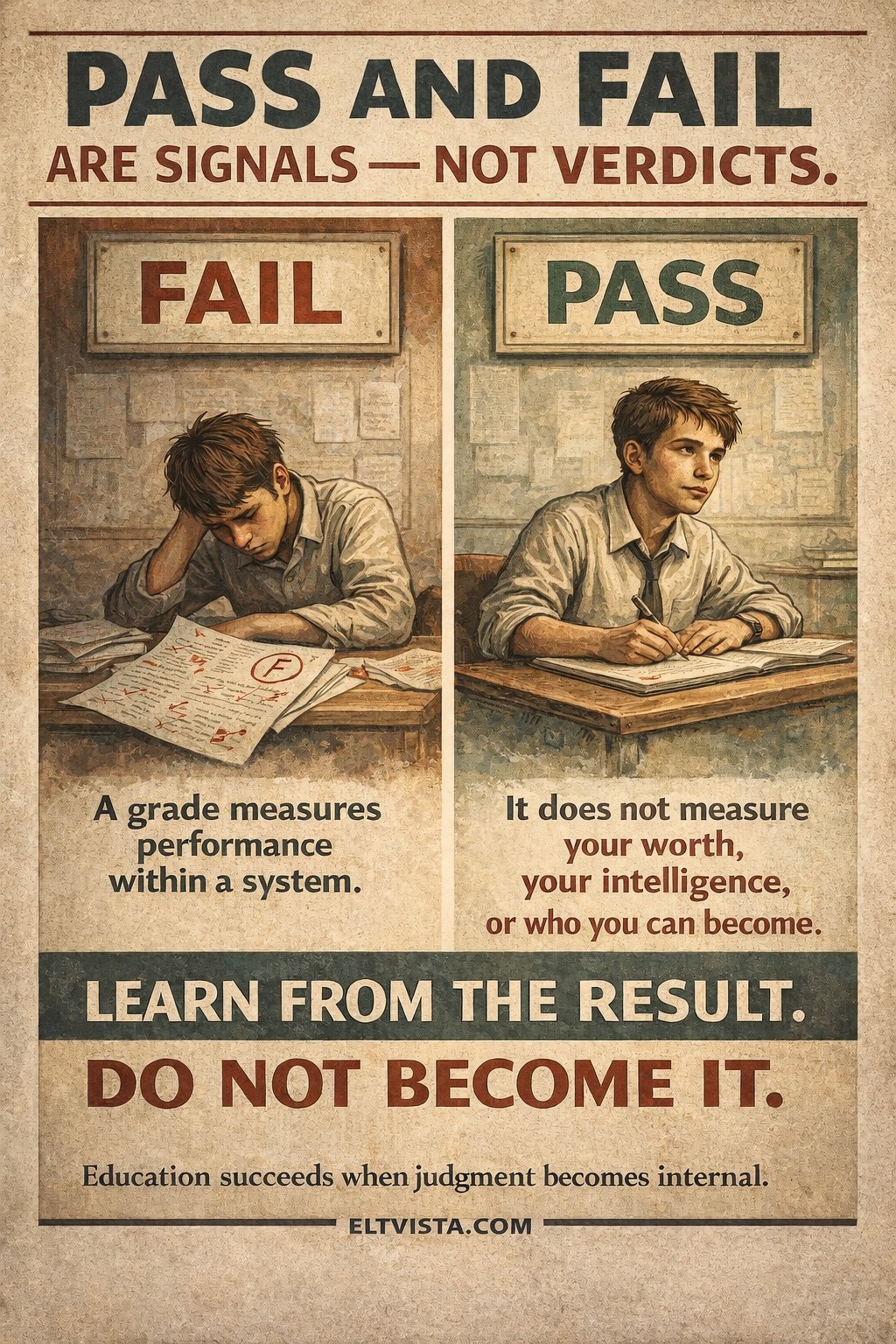
Constructivist, learner-centered, communicative, and humanistic approaches originally emerged partly in reaction against rigid behaviorist models, mechanistic instruction, industrial-style education, and overly prescriptive systems that reduced learners to controllable units moving through predetermined pathways. These movements emphasized emergence, interaction, contextual interpretation, learner variability, negotiation of meaning, identity, social dynamics, and the profoundly unpredictable nature of human learning itself.
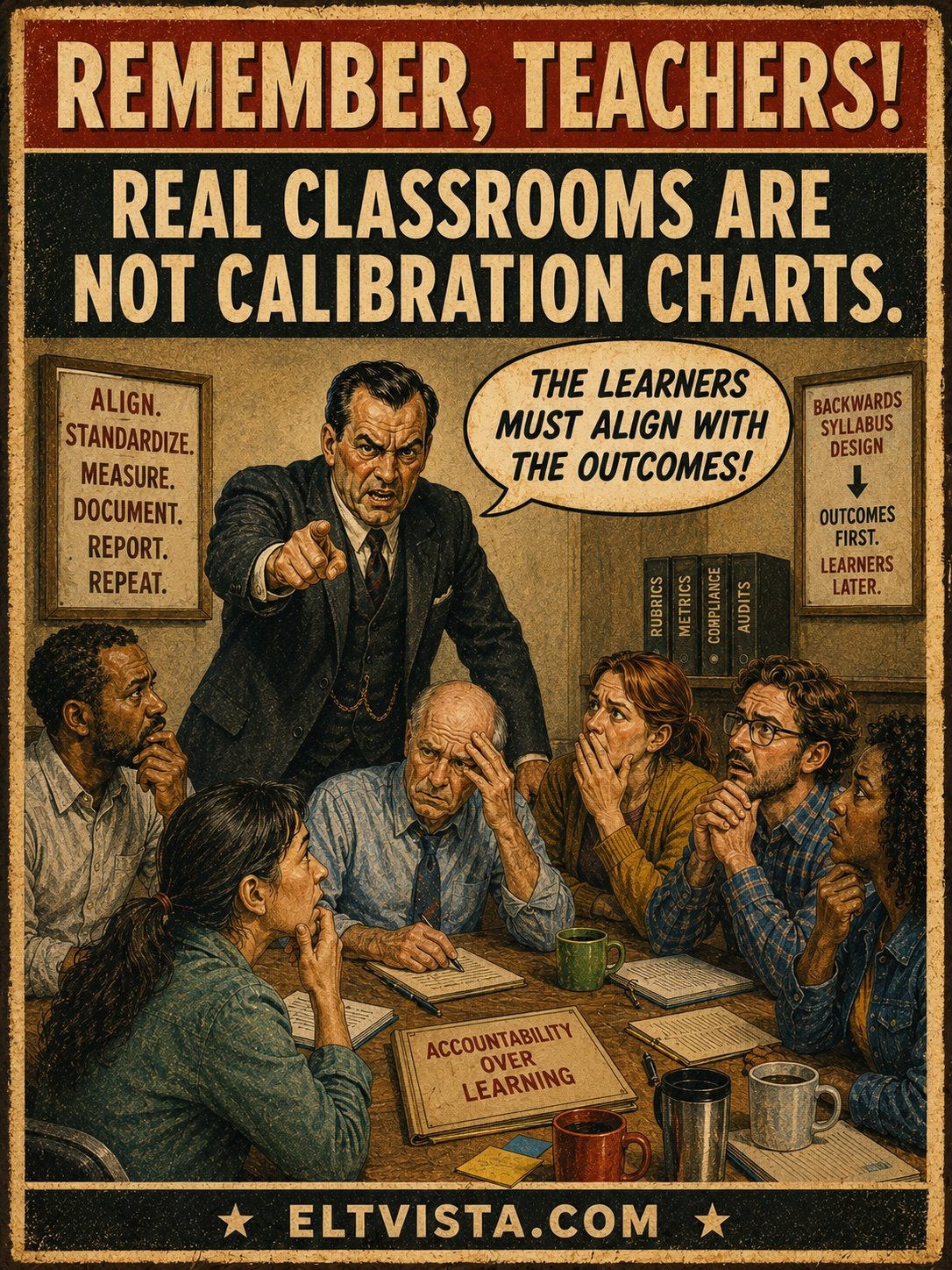
However, once powermongers enter the room, particularly institutional gatekeepers, managerial authorities, accreditation power structures, and bureaucratic interests tied to educational commodification, useful educational tools rarely remain innocent for long. What begins as instructional design—a tool—can become doctrine masqueraded as philosophy. What begins as internally grown quality assurance can become an externally designed commodity. What begins as accountability and autonomy can become a system of control sold back to schools under the respectable language of standards, alignment, institutional improvement, and professionalization.

This is where accreditation organizations and quality-management regimes deserve much closer scrutiny. The problem is not merely that such organizations often ignore or marginalize humanistic and constructivist principles. The deeper problem is that they increasingly impose externally designed operational systems that dictate how teaching should be planned, documented, measured, justified, standardized, and ultimately controlled.
Once accreditation organizations and quality-management regimes become deeply dependent upon measurable alignment, standardized outcomes, visible curricular coherence, audit-friendly documentation, and externally verifiable compliance, they naturally begin privileging educational approaches that are easiest to operationalize, standardize, replicate, compare, defend, and scale across large institutional systems.
This is the point where systems begin universalizing themselves.
Predefined outcomes, measurable competencies, standardized rubrics, behavioral objectives, assessment mapping, alignment protocols, and even so-called “best practices” slowly stop functioning merely as organizational tools and begin functioning as centralized definitions of professional legitimacy itself.
Because once legitimacy becomes tied primarily to measurable visibility and operational compliance, approaches that resist easy standardization gradually begin appearing less rigorous, less accountable, less scientific, less professional, or insufficiently aligned with institutional expectations.
This is where one-size-fits-all thinking mutates into educational orthodoxy.
Not necessarily because educators collectively conspire to eliminate educational diversity, but because accreditation structures, audit systems, and managerial frameworks increasingly normalize whatever they can most easily measure, compare, audit, standardize, replicate, and defend bureaucratically.
Over time, organizational convenience begins disguising itself as pedagogical truth.
Methodologies become expectations.
Expectations become mandates.
Alignment becomes compliance.
Compliance becomes legitimacy.
In the name of “quality,” and with the good seal of “Accredited/Approved,” these organizations increasingly subvert decades of research and professional development within TESOL itself—particularly work connected to humanistic education, learner-centered teaching, constructivism, communicative interaction, affective factors, sociocultural learning, reflective teaching, learner autonomy, and the interpretive realities of actual classrooms.
What remains is often not education in the humanistic sense at all, but compliance culture disguised as educational legitimacy.
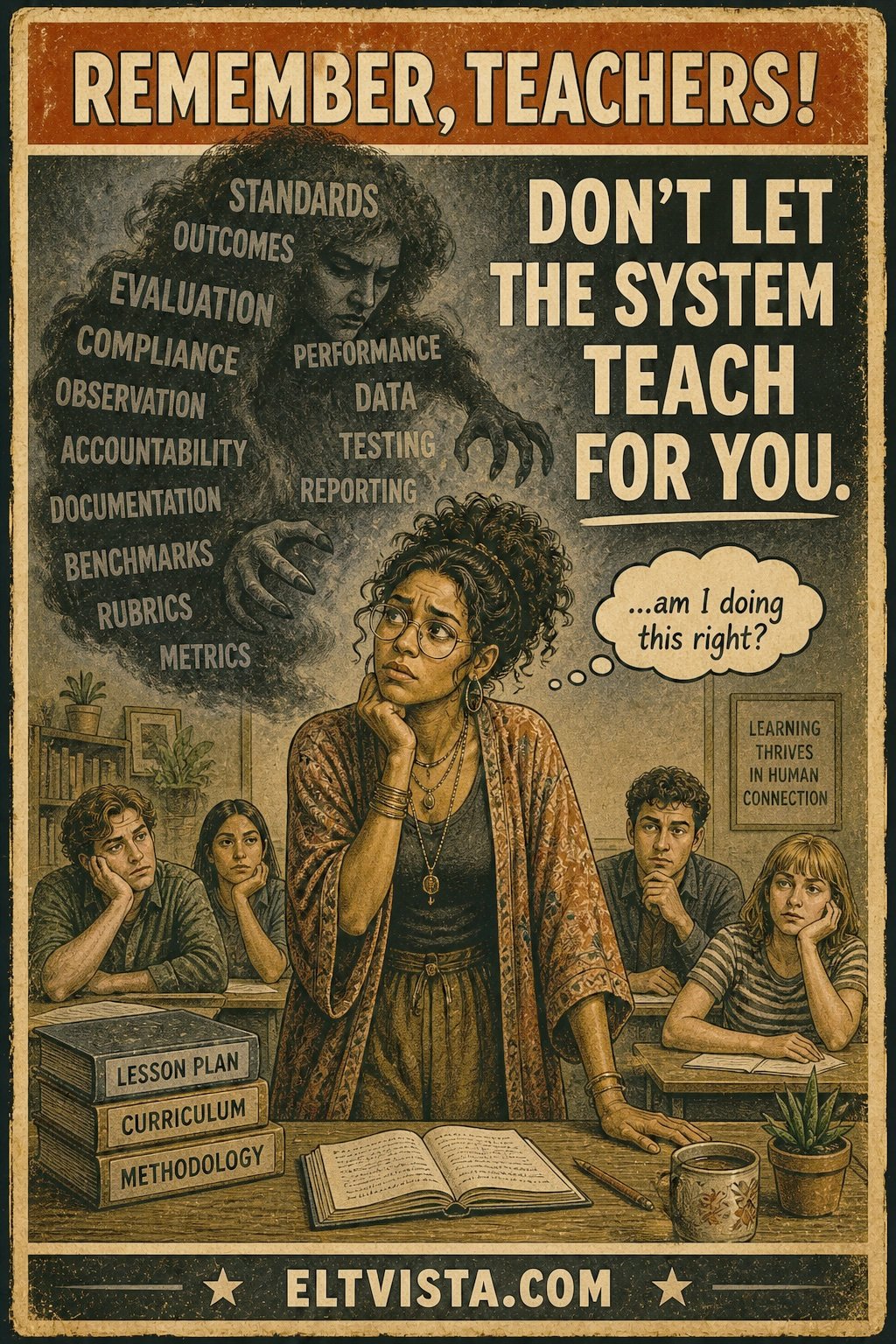
Eventually, educators working outside dominant operational systems begin appearing professionally suspicious simply because they refuse reducing complex human learning into standardized institutional performance models. This is precisely where groupthink begins entering the profession—not always through overt censorship or authoritarianism, but through institutional gravity itself.
This is not merely a curriculum issue.
It is what happens when institutional authority slowly mistakes operational control for educational wisdom.
The Collision Becomes Visible
What makes this development especially troubling within TESOL is that the profession itself spent decades moving in almost the opposite philosophical direction.
Long before accreditation culture, audit-friendly curriculum mapping, and outcomes-based operational systems became dominant institutional obsessions, TESOL had already been evolving toward increasingly humanistic, communicative, learner-centered, and constructivist understandings of teaching and learning.
This did not happen accidentally.
In many respects, the profession was reacting against precisely the kinds of rigid, mechanistic, behaviorist, and industrial-style educational models that earlier approaches often normalized. Over time, communicative interaction, contextualized language use, learner autonomy, affective factors, sociocultural learning, reflective teaching, negotiated meaning, and classroom responsiveness increasingly became central concerns within TESOL theory and practice.
Writers and teacher educators such as Jack C. Richards and David Nunan, among many others, contributed significantly to this broader professional movement. Their work increasingly emphasized curriculum as something contextual, lived, negotiated, adaptive, learner-centered, and deeply connected to actual classroom realities rather than merely externally imposed procedural systems.
Importantly, this is not an attempt to place words into their mouths, nor to suggest that such scholars opposed structure, curriculum design, accountability, or professional standards themselves. That would be inaccurate and unfair.
The contradiction lies elsewhere.

While TESOL increasingly explored communicative interaction, contextual interpretation, learner variability, reflective teaching, and humanistic responsiveness, accreditation organizations and operational quality-management structures increasingly moved toward measurable alignment, predefined outcomes, standardized curricular visibility, audit-friendly documentation, and externally verifiable compliance systems.
That contradiction matters.
Because constructivist, communicative, and social-emotional teaching principles do not emerge from the assumption that human learning unfolds mechanically through standardized pathways. They emerge from the recognition that language learning is profoundly social, contextual, interpersonal, developmental, emotional, interpretive, and deeply connected to human identity itself.
And this is precisely where the collision becomes impossible to ignore.
If this contradiction has become familiar to many TESOL professionals—and I suspect it has—then a much larger question remains. What happens when systems built around standardization, alignment, operational visibility, and externally verifiable compliance encounter a profession increasingly grounded in human variability, contextual interpretation, communicative interaction, learner-centered practice, and social-emotional development?
Perhaps the greatest danger is not that such systems exist. The danger is that they become so normalized that alternative ways of thinking about teaching, learning, and professionalism cease appearing as legitimate alternatives at all—and gradually disappear from view altogether. Once that happens, compliance no longer appears as compliance. It simply appears as common sense.
That question, and its implications for TESOL, deserve much closer examination.
The next article in this series examines that question more closely. If language learning is profoundly social, contextual, emotional, interpretive, and deeply connected to human identity, how far can standardized systems go before they begin colliding with the realities of learning itself?
And when that collision occurs, what role remains for professional judgment, contextual responsiveness, and the interpretive space teachers require to teach human beings rather than merely implement systems?
Suggested Reading
For readers interested in exploring some of the historical, curricular, and humanistic traditions discussed in this article, the following works provide useful starting points:
- Ralph Tyler — Basic Principles of Curriculum and Instruction (1949)
- Benjamin Bloom et al. — Taxonomy of Educational Objectives (1956)
- Robert F. Mager — Preparing Instructional Objectives (1962)
- Jack C. Richards — Curriculum Development in Language Teaching (2001)
- David Nunan — The Learner-Centred Curriculum (1988)
- Paulo Freire — Pedagogy of the Oppressed (1970)
- H. Douglas Brown — Teaching by Principles: An Interactive Approach to Language Pedagogy (multiple editions)
The inclusion of these works should not be interpreted as endorsement of every idea discussed in this article. Rather, they represent influential contributions to the broader conversations surrounding curriculum design, instructional systems, communicative language teaching, learner-centered education, and humanistic approaches to teaching and learning.
While you are contemplating your personal and profesional development, please consider our self-paced 120-hour online certificate course to your list of teaching qualifications:
For more information, click here for the ELT Vista Certificate in Humanistic TESOL Teaching. Enrollment is now open!
Also, for more articles like this one, please consider our publication, What About The Teacher?—a humanistic guide to self-actualization for TESOL teachers seeking personal and professional development. The book is available online in both digital and paperback formats at: https://www.amazon.com/dp/B0FPBWNXTZ