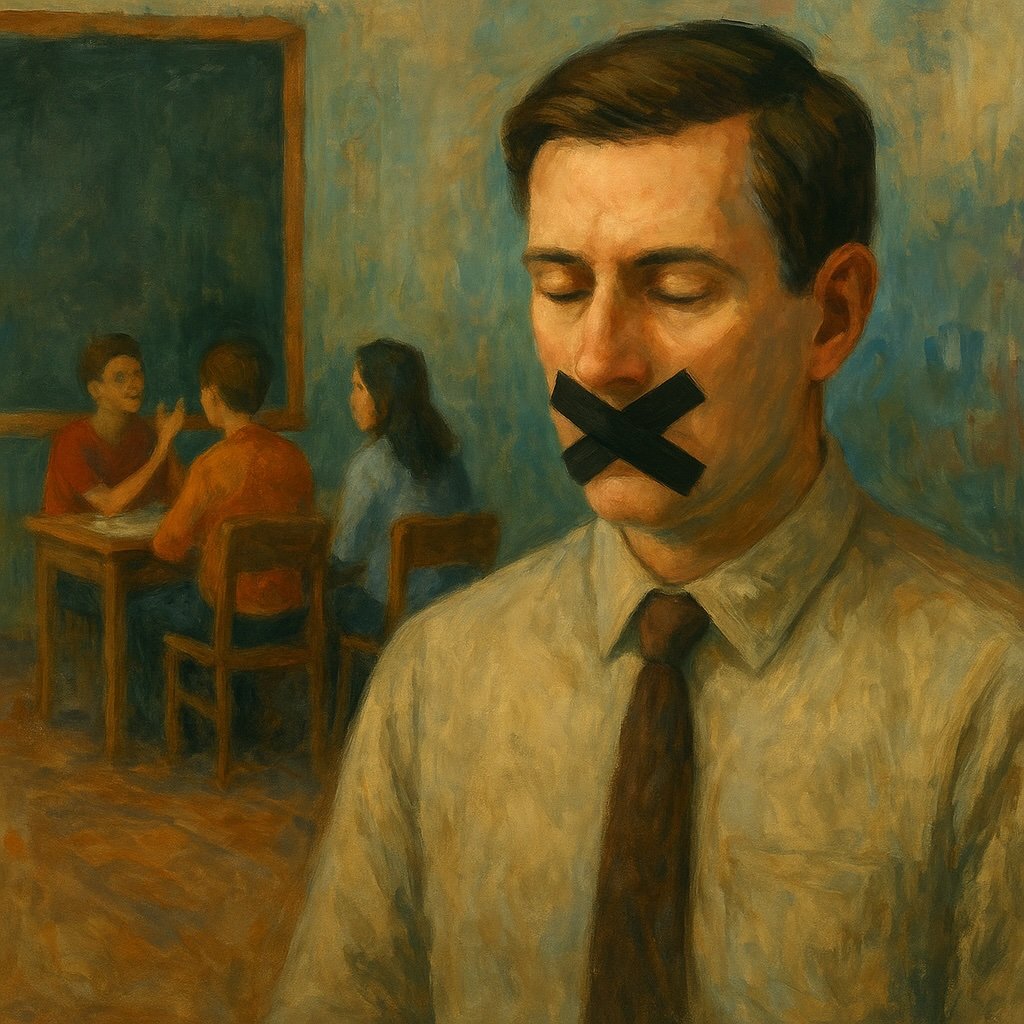


Education is not our degrees, but our aesthetics. The way we talk, flirt, walk down the street, hold the door for a stranger in the elevator. Education is our words, our discrete gestures, our freedom, the limits of that freedom, the music we listen to, the books we return to—and yes, how much we care about the planet we inhabit.
The aphorism “Man is the answer, whatever the question” is often mis-attributed to Dadaist and Surrealist writer André Breton. In truth, it may not have originated with him, yet it carries with it a pressing implication: if man is the answer, then we are always implicated in the crisis and its solution. Whether the question is environmental collapse, ethical decay, or social inertia, the answer—for better or worse—is us.
That principle is older than Breton. Its origins go back to the ancient Greek riddle of the Sphinx—who asked passersby:
“What walks on four feet in the morning, two in the afternoon, and three at night?”
—The answer: Man.
But answer alone was never the point. Oedipus’s triumph wasn’t merely in knowing what “man” was—it was understanding that each stage of life demands a different stance, a different accountability. If we answer “man,” then we stand within the circle of both origin and obligation.
The Anthropocene: A Human Answer to a Human Problem

As someone who lives in Miami, Florida—ground zero for rising sea levels—I know that the Anthropocene isn’t an abstract classroom theme or a greenwashed advertising slogan. It is immediate and tidal. It reveals itself in flooded streets during King Tide season, in salt intrusion into our water supply, in the uneasy intimacy we have developed with rising seawater.
And for me, it’s personal, especially when I walk down a flooded Brickell Avenue after a rainstorm, I see the gap between high-stakes reality and classroom artifice widening like a cracked seawall. It is one of the reason I write climate fiction as tales of cautionary warnings—however absurd they may be.
Yes, in many places, climate change has already moved into the neighborhood. And as teachers, as materials developers, it means something to stand in front of a classroom built on land that is slowly, visibly, and measurably disappearing. To treat climate awareness as just another thematic unit between “Shopping” and “Sports” is not only poor pedagogy—it is a dereliction of responsibility.
In the age of climate fiction with local roots, the language classroom cannot afford to traffic in decorative content. “Climate awareness” must be operationalized through functional language, ethical context, and genuine agency. We must go beyond the “theme lesson”—beyond recycling tips and Earth Day coloring sheets—toward language that supports self-inquiry, expression, and change.
1. Grounding Language in Responsibility
Before we develop materials, we must commit to content with real-world anchor points. With the right framing, a lesson on climate responsibility can help students:
- Express personal commitments: “I pledge to…” / “I will no longer…”
- Negotiate solutions: “What if we changed…” / “How can we reduce…”
- Take civic stances: “I am writing to my city council member to…”
- Use critical vocabulary: carbon footprint, greenwashing, environmental justice
Instead of a generic “environment” unit, we can link language directly to responsibility:
“I’m accountable for my waste.”
“This is what I can do about energy consumption.”
After all, environmental literacy is a form of linguistic literacy, isn’t it?
2. Material Design for Action
Not all materials need to be solemn or heavy, but they do need to be consequential. We can encourage meaningful practice through lessons like:
Task: Plant-a-Pledge
- Each student writes a personal pledge using the target language (“I commit to….”).
- Students post these pledges in class or online—not as hashtags, but as public statements.
- Optional extension: ask students to track progress on their pledge over the semester and share their reflections.
Reading Text: Oedipus and the Sphinx (adapted)
- Discuss how “man” solved the riddle—and whether man today is still an answer, or a problem.
- Follow-up discussion: “If we are truly the answer, how do we respond to rising seas, melting poles, burning forests?”
Functional Language Gap-Fill:
I take responsibility for ___________ because it affects ___________.
If I refuse to buy ___________, I can reduce ___________.
My environmental impact will be ___________ in five years.
3. Relevant Cultural and Local Links
Responsible language learning takes seriously the place and context in which it is taught:
- In Miami, we speak about King Tides, salt intrusion, storm surge, and resiliency zoning — all real phrases needed to navigate real life.
- In the UK, pensioners’ allotment gardening becomes a lesson in land stewardship, sustainability, and community equity.
- In Japan, students learn the functional difference between mottainai (“what a waste”) and silence—and how language itself can shape action.
4. Reflective Language and Self-Awareness
In the end, a lesson on climate responsibility is never just about climate. It is also a lesson on self-awareness. It begins, as ever, with the teacher:
- Who am I in this classroom?
- What is my academic and ecological footprint?
- How do my words perform my values?
At the core of our book, What About the Teacher?, is the recognition that education is not what you teach alone—it is what you embody. A teacher who asks students to examine their carbon footprint must have at least examined his or her own. Language doesn’t live in the mind; it gathers weight in the body, the soil, the sea.
If we are, indeed, “the answer, whatever the question,” then the challenge before us isn’t curricular—it is ontological.
Final Reflection
Education is our quiet resistance against carelessness—grammatical, ecological, political. It is not neutral. It is our hands holding the weak. It is our refusal to sell values for convenience. It is the choice to stand in the flood zones of life and still teach responsibly, ethically, and with a voice that knows the difference between catchy content and committed living.
If education is our behavior, then language is its structure. And so we return to that unverified aphorism, not to trace whether Breton wrote it, but to ask: What if he had lived it? What if we did?
For more articles like this, please consider our publication, What About The Teacher?—the main text upon which the our online certificate course in humanistic TESOL teaching is based. The book is available online in both digital and paperback formats at: https://www.amazon.com/dp/B0FPBWNXTZ
✨ While you are contemplating your personal and profesional development, as well as your New Year’s resolutions, please consider adding our self-paced 120-hour online certificate course to your list: For more information, click here for the ELT Vista Certificate in Humanistic TESOL Teaching. Enrollment Is Open Now with a special! Holiday Launch promotion! ✨