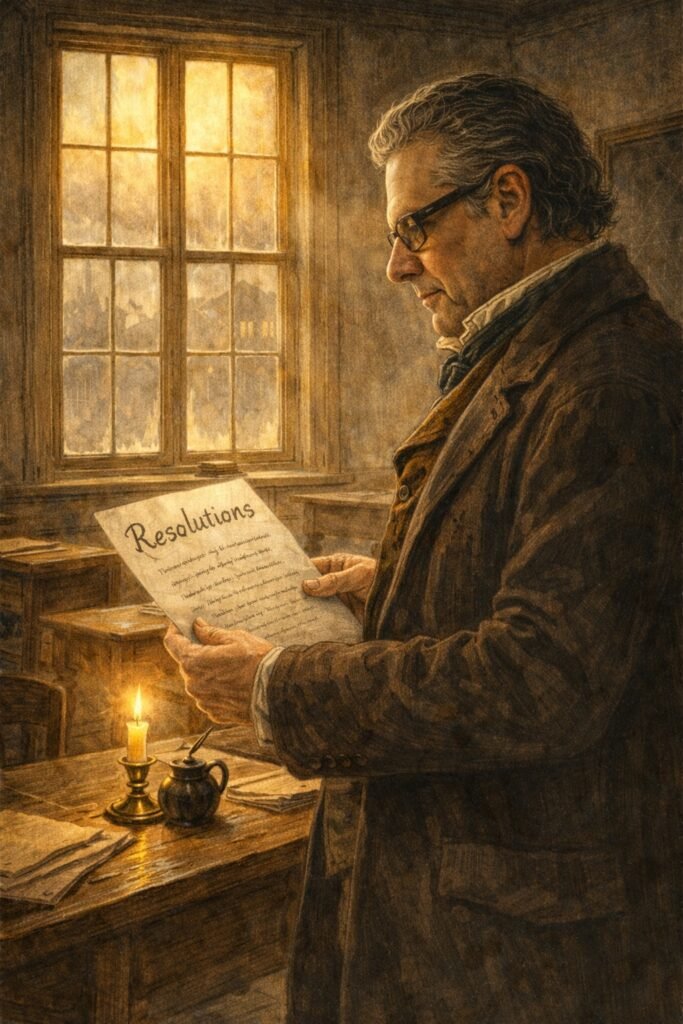
Resolutions are dead—to begin with …

By the time December rolls around, the word resolution can feel a little worn out. For many teachers, it arrives trailing spreadsheets, improvement plans—the forms, the frameworks, the targets, the templates—and the faint guilt that we should somehow emerge in January shinier, sharper, and more “effective” than we were twelve months earlier. It is hardly surprising that the instinctive response is something closer to Bah, humbug! than renewed enthusiasm.
Yet that reaction is worth pausing and mulling over—perhaps over the mulled wine. When teachers resist resolutions, it is not usually because they dislike growth, reflection, or change. More often, it is because resolutions have been framed as another performance—sometimes uncomfortably close to a year-end review—another promise to do more, fix more, or carry more than is reasonable, only to be dismissed as quickly as the gift of yet another fruit cake or a pair of orange socks, two sizes too small.
Perhaps the problem is not the resolution itself, but what we think a resolution is meant to be.
When Resolutions Become Recognition
Although resolutions are familiar territory in the classroom—often used as tidy, seasonal writing tasks for students—teachers themselves tend to experience them quite differently. When it comes to their own professional lives, resolutions are often framed as declarations of willpower: Next year I will… teach differently, manage better, integrate more tools, finally master whatever has been hovering on the professional horizon. However, meaningful change rarely begins with force. It begins with recognition.
In its simplest sense, reflection is not about judging past actions but about seeing them clearly. Only then does intention have somewhere solid to land. In this way, reflection does not follow resolutions; it quietly comes first.
A Familiar Ghost Story (Without the Moral Lecture)
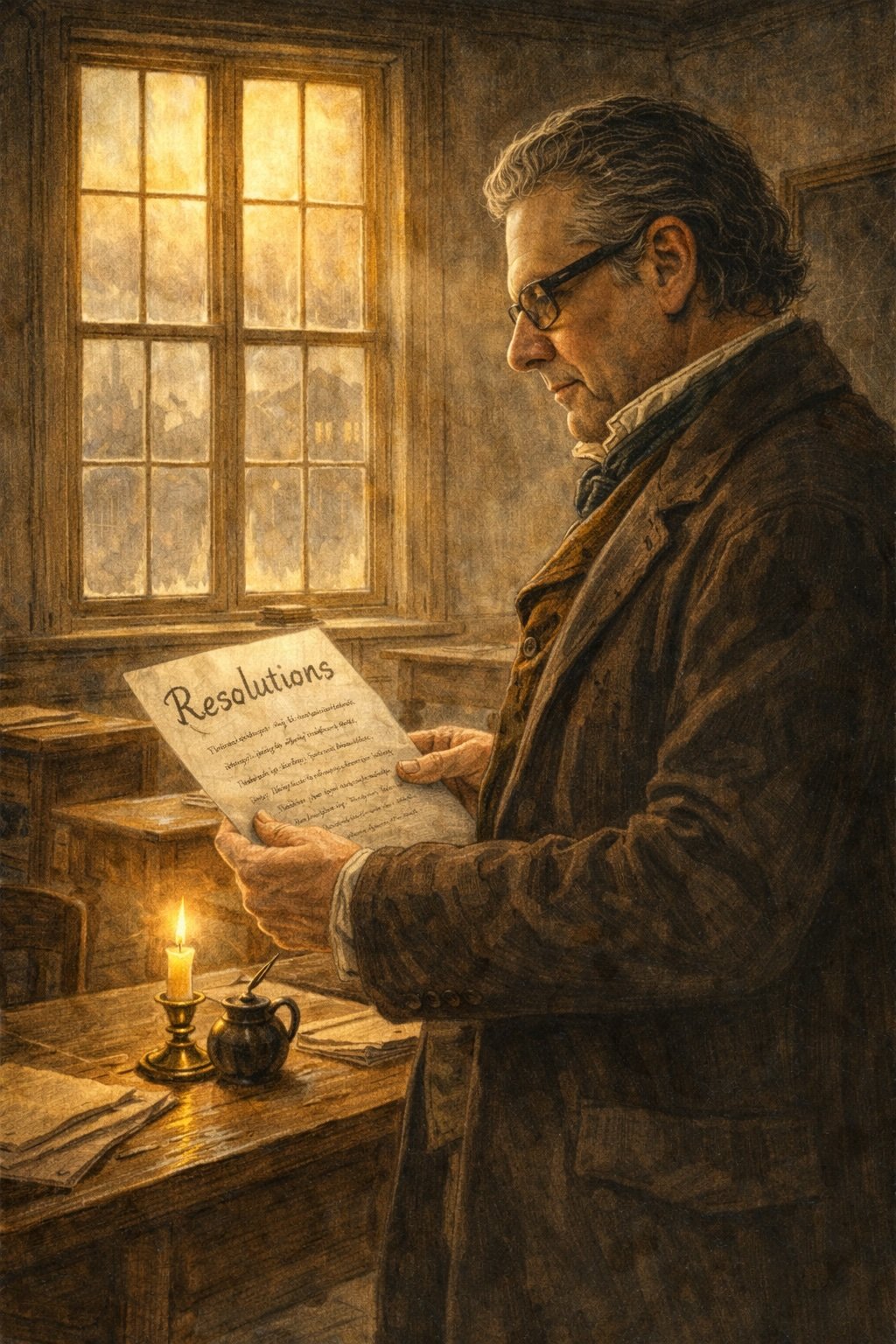
Long before resolutions became annual rituals, Charles Dickens, the nineteenth-century English novelist and social critic, offered a rather effective alternative. In A Christmas Carol, Scrooge does not sit down and draft a list of behavioural targets or learning outcomes. He is shown his life—where it came from, how it currently unfolds, and where it is heading if nothing changes.
In the end, what transforms Scrooge is not instruction, guilt, or external pressure. It is perspective. He wakes up changed because he has finally seen himself across time.
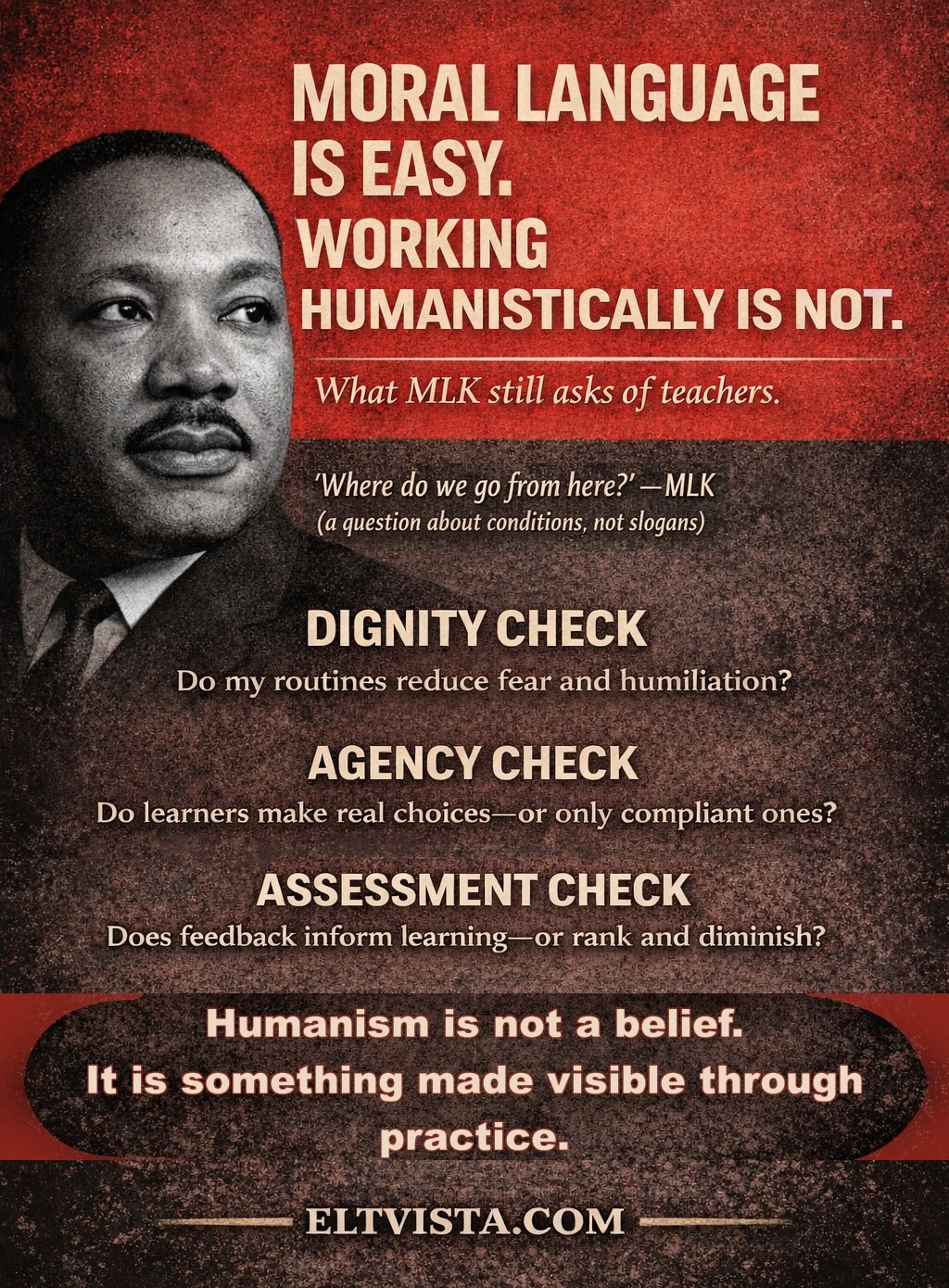
I would suggest that there is something quietly humanistic about that.
Reflection as Interruption, Not Improvement
John Dewey, the American philosopher and educational thinker whose work laid the foundations for reflective and experiential learning—born just in time to grow up in a world where Dickens was still very much in the air—argued that reflection begins when routine is interrupted, when habit no longer feels sufficient. That description fits Scrooge rather well: his transformation does not come through instruction or reassurance, but through the sudden collapse of the life he has been repeating without question.
Carl Rogers, the psychologist and central figure in humanistic psychology, later approached growth from a different angle, suggesting that change is most likely when individuals are able to confront themselves honestly in an atmosphere free from judgment. In Scrooge’s case, no such comfort is offered; recognition comes first, and the warmth follows later.
Aristotle, the ancient Greek philosopher concerned with ethics, purpose, and human flourishing, framed development as movement toward a meaningful end rather than compliance with rules. In that sense, Scrooge’s problem was never a lack of discipline, but a life oriented toward the wrong destination.
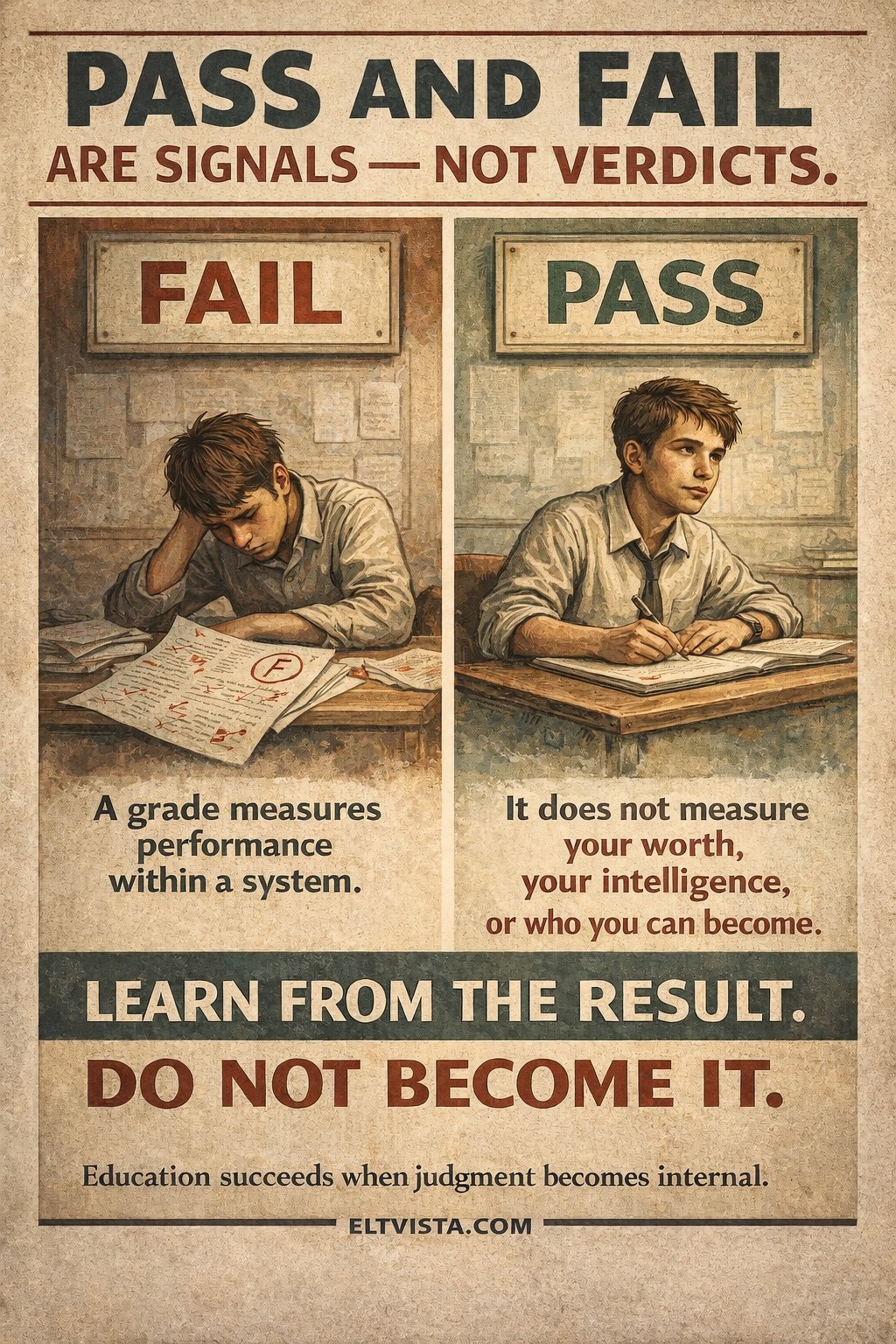
Different thinkers, different centuries, and yet the same underlying idea appears: change follows awareness, not coercion. The resolution, if it comes at all, is a by-product of seeing rather than a command to do.
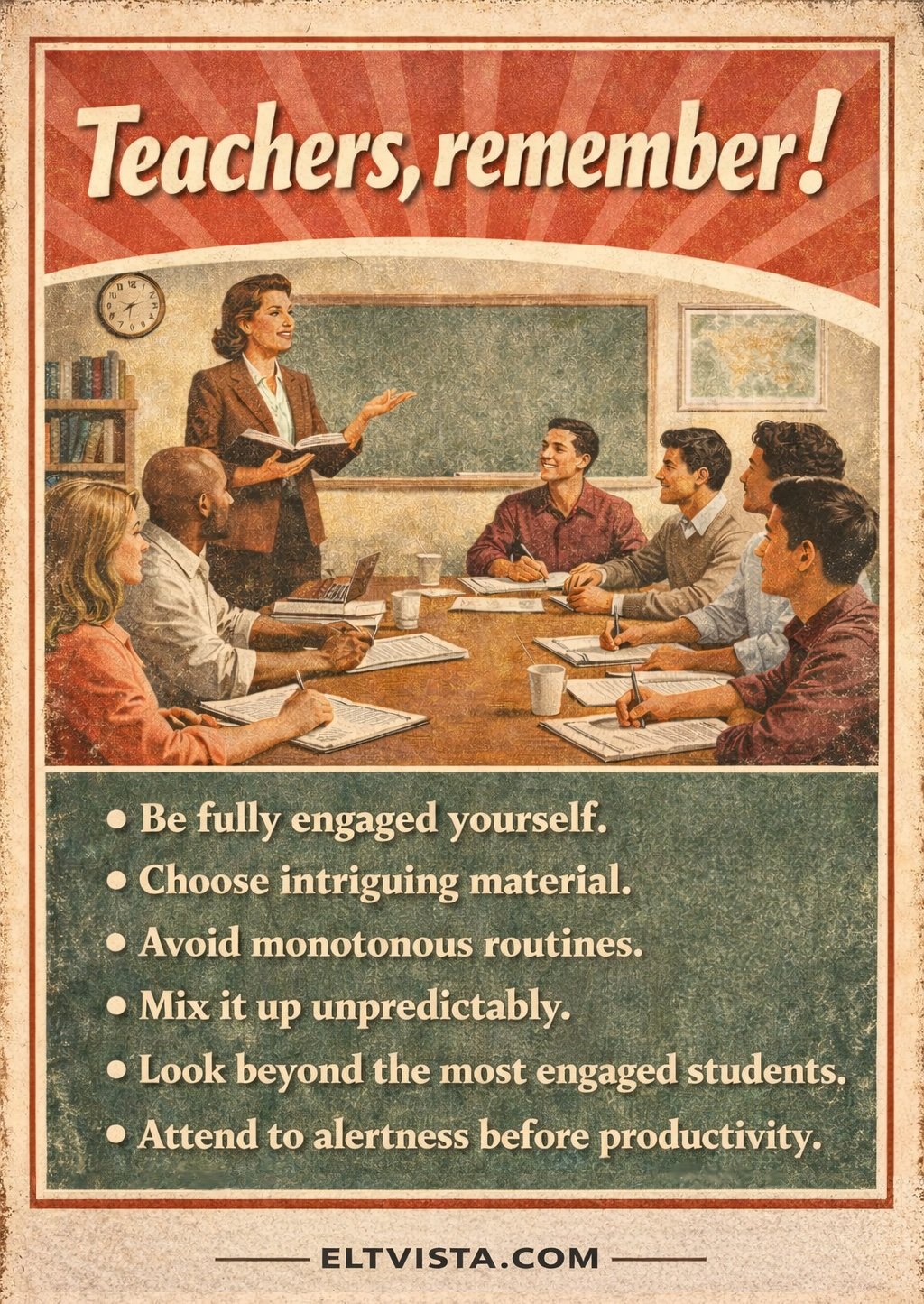
For teachers, this matters. Teaching can function smoothly—lessons delivered, objectives met—while something essential quietly drifts out of alignment, much like Scrooge’s life did before anyone thought to knock on the door.
What About the Teacher?
A Practical Resolution for Community

By the end of the year, many teachers are still doing the work and meeting expectations, even if something feels slightly out of step beneath the surface—rather like Bob Cratchit, Scrooge’s long-suffering clerk in A Christmas Carol, keeping everything running while something human quietly goes unmet. When that happens, the answer is rarely to push harder or add more. Often, what is needed first is orientation—a chance to take stock in company rather than in isolation.
Rather than treating reflection as a private burden or handing it upward to authority, teachers might begin closer to home. Before the new term starts, initiate at least one informal, agenda-light conversation with trusted colleagues—over coffee, in the staffroom, or wherever teachers actually talk. The purpose is not problem-solving or self-justification, but recognition: what has sustained your teaching this year, and what has quietly thinned it.
No forms. No metrics. No performance language.
That shared sense-making does not need to be authorised, approved, or translated upward to be valid. Teachers do not need policy, permission, or professional convention to tell them when something essential has gone missing. In A Christmas Carol, Scrooge’s change begins when he breaks from the old logic of industry for its own sake—the nose-to-the-grindstone belief that working harder is the same as living better—and re-enters relationship. Teaching, too, often finds its way forward not through increased effort or inherited routines, but through community, recognition, and the courage to step out of isolation.
Becoming Known Among Others
Scrooge does not become a different person; he becomes a more fully “himself” one. This distinction matters, especially in a profession where reinvention is often demanded without reflection.
At the end of A Christmas Carol, Dickens tells us that Scrooge “became as good a friend, as good a master, and as good a man, as the good old city knew.” He is known less for what he believes than for how he lives among others, how he shows up in relationship, and how he re-enters the social world he had withdrawn from.
Perhaps the most human resolution a teacher can make at the end of the year is not another promise to improve, but the decision to notice where they already stand—among colleagues, learners, and communities. Sometimes, that is all it takes to wake up ready for what comes next.
For more articles like this, please consider our publication, What About The Teacher?—the main text upon which the our online certificate course in humanistic TESOL teaching is based. The book is available online in both digital and paperback formats at: https://www.amazon.com/dp/B0FPBWNXTZ
✨ While you are contemplating your personal and profesional development, as well as your New Year’s resolutions, please consider adding our self-paced 120-hour online certificate course to your list: For more information, click here for the ELT Vista Certificate in Humanistic TESOL Teaching. Enrollment Is Open Now with a special! Holiday Launch promotion! ✨