
Skip to content
ELT Vista

ELT Vista

Personal and Professional Development for TESOL Teachers

  • About Us
    • Newsletter
    • Privacy Policy
  • Contact Us
  • Courses
    • ELT Vista Certificate in Humanistic TESOL Teaching
    • Courses Overview
  • Publications
    • What About The Teacher?
  • Services
  • Articles for TESOL Teachers
  • Toggle search form

Tag: Self-Actualization

The Age of Anxiety and the Teacher

Posted on May 3, 2026May 3, 2026 By eltvista.com
The Age of Anxiety and the Teacher
Extending the Moment of Hesitation
TESOL, Professional Development, Reflective Teaching, ELT Vista, eltvista.com

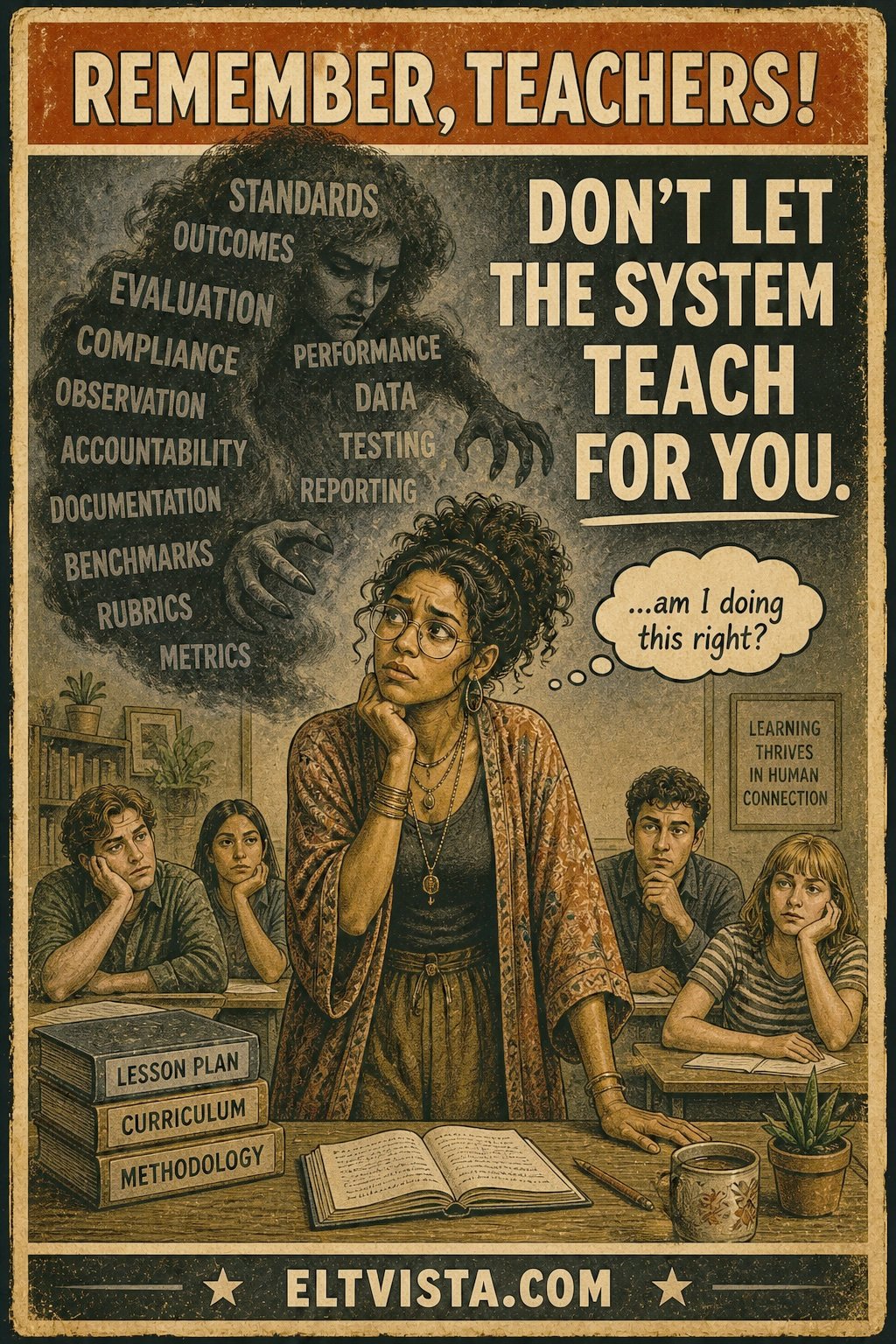
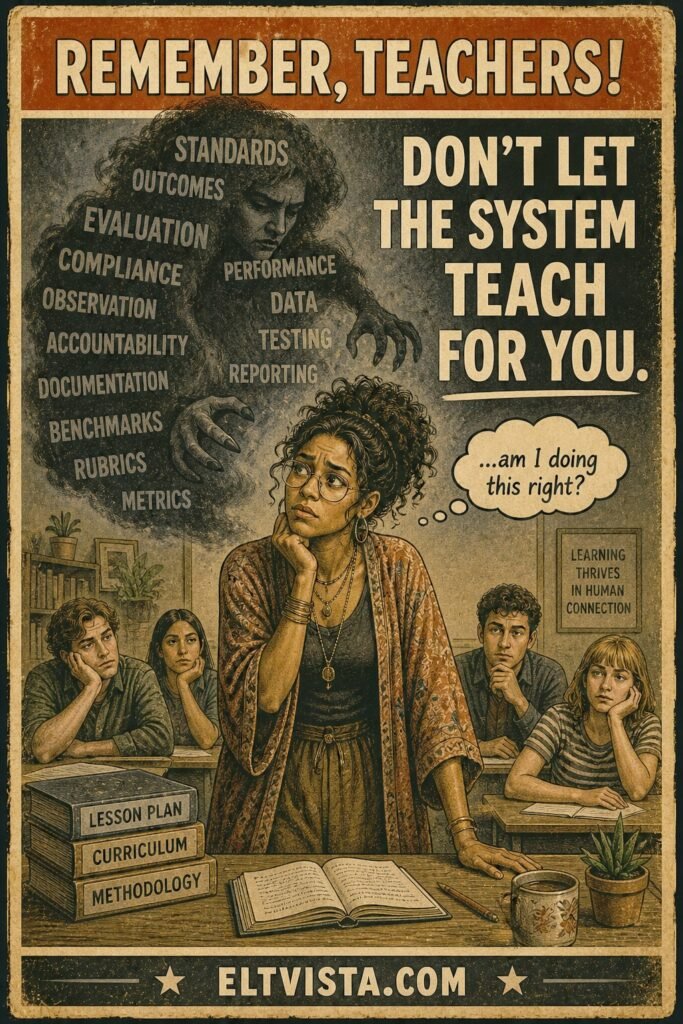
Stella Adler, acting coach and drama theorist, once remarked that “life beats down and crushes the soul, and art reminds you that you have one.” She was speaking in the context of the twentieth century, a period marked by war, economic depression, and the dislocations of modern life. Yet her observation continues to resonate today. Many writers have described modern society as an age of anxiety—a time in which institutions grow larger, systems become more complex, and individuals often find themselves navigating pressures that feel impersonal and difficult to influence.

Teachers, perhaps more than most professionals, recognize this condition. They encounter it not only in policy and institutional design, but in the daily negotiation between what is required and what is possible in the classroom.

The modern language teacher works within a dense web of expectations. Administrative structures demand documentation and measurable outcomes. Schools operate under financial pressures that often translate into part-time contracts, limited job security, and wages that struggle to keep pace with the cost of living. Experience—once considered the foundation of professional authority—can sometimes be treated as secondary to credentials, paperwork, or the latest fashionable methodology. Meanwhile, the broader culture celebrates entertainers, athletes, and now even social-media influencers with enthusiasm that rarely extends to those whose work quietly shapes the intellectual and human development of others.

And still, teachers continue to show up in classrooms every day.
Read More “The Age of Anxiety and the Teacher” »

Blog

Grades, Judgment, and the Machinery of Worth

Posted on January 4, 2026January 4, 2026 By Jay Leonard Schwartz
Grades, Judgment, and the Machinery of Worth

Grades, Judgment, and the Machinery of Worth

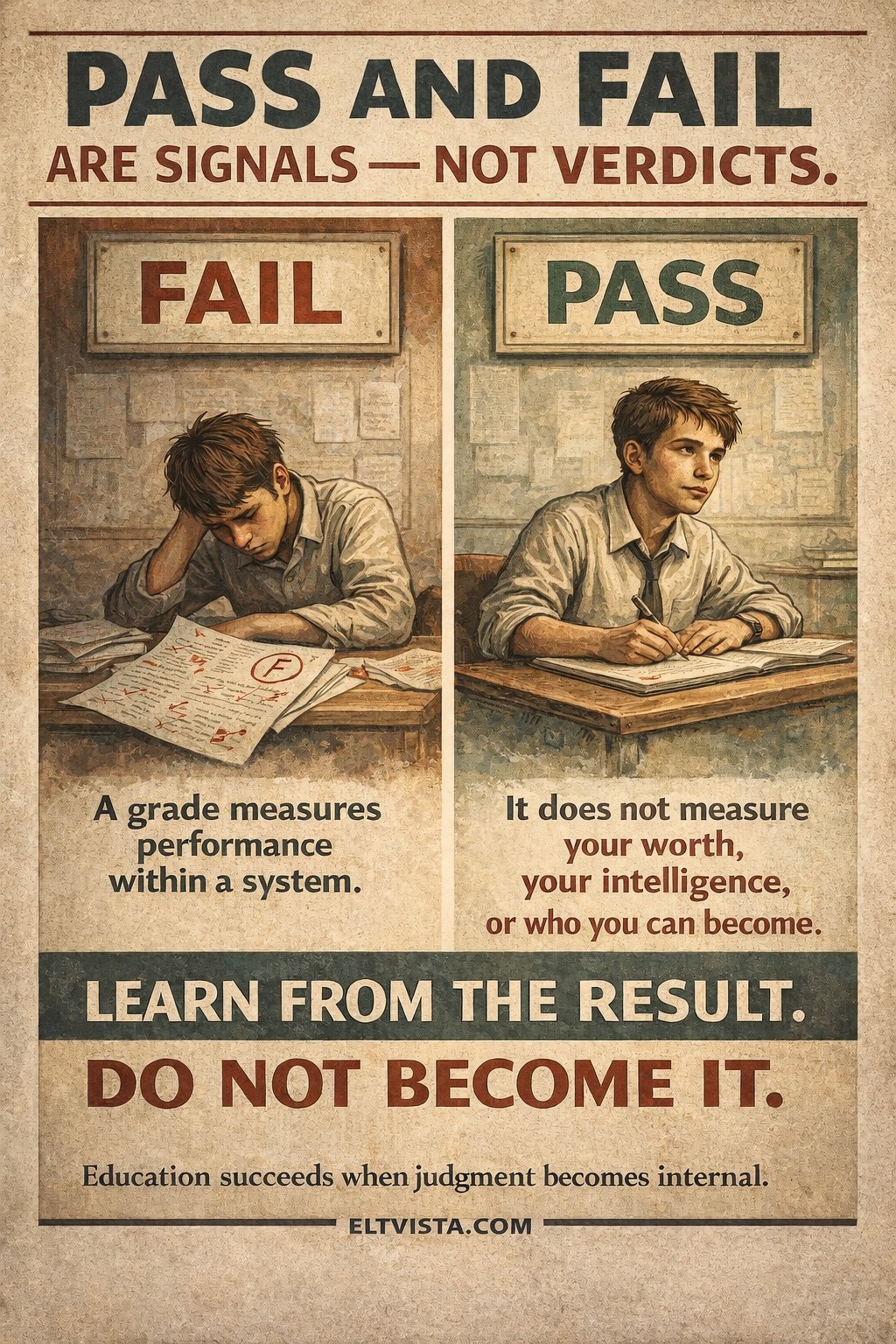
Grades are Signals

Nobody ever tells students the most dangerous thing about grades:
they don’t just measure performance—they train you to outsource your sense of worth.
They feel neutral and necessary. That’s exactly why they’re dangerous.

Grading is a necessary evil in education. Necessary, because institutions require some way to sort, credential, and move people through systems at scale. Evil—not in a melodramatic sense, but in a quiet, corrosive one—because grades are so easily mistaken for something they are not.

A grade is information. It is a signal within a bounded system. It is not a measure of human worth, potential, or legitimacy. Most students are never explicitly told this, which is why the signal so easily becomes a verdict. Unless that caveat is made explicit, students absorb something far more dangerous than the grade itself: the idea that judgment arrives from elsewhere, and that its verdict is final.

This is where the real injustice begins. Not because the system is intentionally cruel, but because it is largely silent about what its judgments are meant to mean—and what they are not.

Read More “Grades, Judgment, and the Machinery of Worth” »

Blog

Of Resolutions, Humbug, and Community—A Reflective Riff on Scrooge

Posted on December 18, 2025January 4, 2026 By Jay Leonard Schwartz
Of Resolutions, Humbug, and Community—A Reflective Riff on Scrooge

Long before resolutions became annual rituals, Charles Dickens, the nineteenth-century English novelist and social critic, offered a rather effective alternative. In A Christmas Carol, Scrooge does not sit down and draft a list of behavioural targets or learning outcomes. He is shown his life—where it came from, how it currently unfolds, and where it is heading if nothing changes.

Blog

Protecting or Infantilizing? Rethinking Blanket Bans, Digital Literacy, and the Role of Education

Posted on December 8, 2025January 4, 2026 By Jay Leonard Schwartz
Protecting or Infantilizing? Rethinking Blanket Bans, Digital Literacy, and the Role of Education

“The pattern is familiar: we fear the tool instead of investing in the skills that would make its use healthy and meaningful. Moreover, when we focus solely on removing access, we risk suppressing expression rather than equipping children to navigate a digital world they will inevitably inherit. “

Blog

Teaching in the Age of Angst: Erich Fromm, Self-Actualization, and the Teacher-Self in TESOL

Posted on December 3, 2025January 4, 2026 By Jay Leonard Schwartz
Teaching in the Age of Angst: Erich Fromm, Self-Actualization, and the Teacher-Self in TESOL

Fromm believed the great paradox of modern life was this: people crave freedom, yet fear the responsibility that freedom demands. In response, they retreat—into systems, hierarchies, labels, and roles that offer security at the cost of authenticity. TESOL teachers know this tension intimately.

Blog

When People Show You Who They Are: Lessons in Leadership, Crisis, and Self-Actualization

Posted on October 10, 2025January 4, 2026 By Jay Leonard Schwartz
When People Show You Who They Are: Lessons in Leadership, Crisis, and Self-Actualization

Maya Angelou once said, “When someone shows you who they are, believe them the first time.” Those words, simple and graceful as they sound, have extraordinary weight in professional life—especially in education, where trust, empathy, and perception form the unseen scaffolding of every classroom and workplace.

Blog

Copyright ©2024 ELT Vista, Jay Leonard Schwartz.

Powered by PressBook Green WordPress theme