Note: This article has reference to our publication, What About the Teacher? – A Humanistic Guide to Self-Actualization for TESOL Teachers
Introduction: The Age of Angst Returns
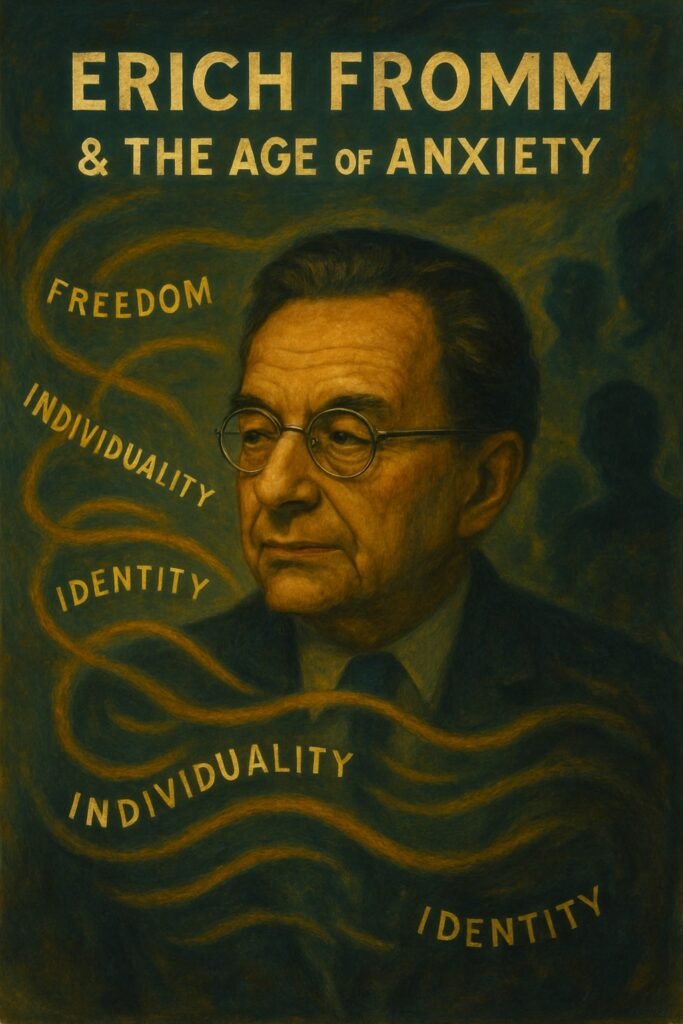
Long before our contemporary debates about burnout, identity, and teacher well-being, the humanistic philosopher and psychoanalyst Erich Fromm argued that modern life was defined by a quiet but pervasive anxiety—what he famously called the age of angst. Born in 1900 in Frankfurt, Fromm became one of the central figures of the Frankfurt School before moving to the United States. A social psychologist, psychoanalyst, and humanist philosopher, he spent his life examining how individuals struggle between freedom and conformity, authenticity and expectation, becoming and belonging. His most influential works, Escape from Freedom (1941), Man for Himself (1947), and The Art of Loving (1956), all explored how individuals navigate identity in a world that relentlessly pressures them to fit a mold.
Fromm’s diagnosis of the twentieth century feels eerily contemporary for TESOL teachers today. The pressures may have changed form, but not substance: standardized assessments, performance metrics, accreditation schemes, native-speakerism, institutional conformity, and the myth that a good teacher is endlessly adaptable and endlessly available.
Moreover, in a profession built on communication, culture, and identity, it is remarkable how easily the teacher’s own self becomes the most invisible presence in the room—especially when “reducing TTT” is treated less as a pedagogical principle and more as a convenient tonic for suppressing the teacher’s voice. The irony is obvious: we ask teachers to cultivate human connection while quietly asking them to mute the most human part of the lesson—themselves. Yet this pressure rarely emerges from sound methodology. More often, it reflects a strategic silencing that allows institutions to market “more student talk” without investing in the pedagogical rigor that meaningful communication actually requires.
In fact, this silencing ignores the simple truth that teachers model language, reasoning, civic discourse, and the very communicative competence learners hope to acquire—forms of modeling that cannot happen in silence. The result is a subtle erosion of professional agency, where teachers are encouraged to perform neutrality rather than exercise informed judgment, presence, and identity.
This is where humanistic education—and the framework of self-actualization—becomes essential. As I argue in What About the Teacher?, teachers do not simply deliver education; they embody it. Teaching is not merely a role; it is a becoming.
The Modern Condition: Freedom vs. Conformity in the TESOL Classroom

Fromm believed the great paradox of modern life was this: people crave freedom, yet fear the responsibility that freedom demands. In response, they retreat—into systems, hierarchies, labels, and roles that offer security at the cost of authenticity.
TESOL teachers know this tension intimately.
Conformity pressures in TESOL include:
- Curriculum expectations that dictate not just what you teach but who you must appear to be.
- External quality and accreditation frameworks that reward compliance over creativity.
- Methodological orthodoxy—the notion that certain approaches (CLT, TBL, Dogme, etc.) define legitimacy.
- Assessment culture, where “learning” becomes synonymous with “measurable outcomes.”
- Prep work framed as compensation, as if endless, invisible labor were simply the cost of belonging.
- Social myths, especially native vs. non-native speaker stereotypes, that pressure teachers to perform identities that are not their own.
Each of these pressures reinforces what Fromm called the “marketing personality” — a condition in which individuals reshape themselves to meet external demand, the way a product adjusts to market trends. In our field, this often becomes the “ideal teacher persona”: efficient, cheerful, compliant, endlessly flexible.
Yet, the truth is that no self that is for sale can also be fully itself.
Marketing the Teacher-Self: A Humanistic Reframe
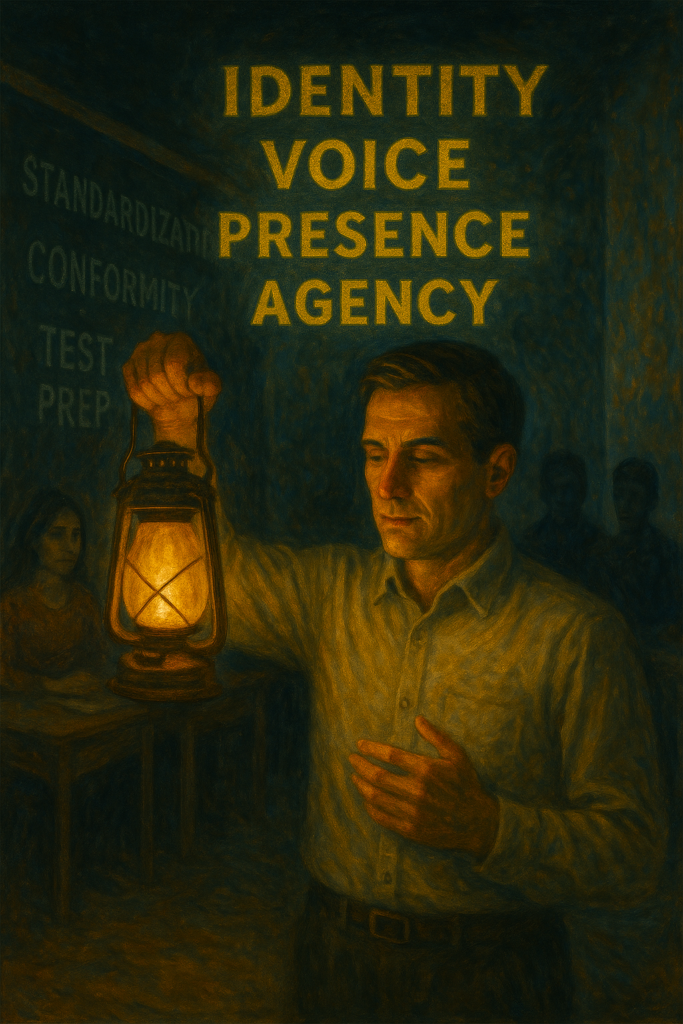
If Fromm were to observe TESOL today, he might say this: many educators are unconsciously socialized into marketing their teacher-self—packaging identity to meet pedagogical, institutional, and cultural expectations. The danger is subtle but real: the more we conform to external images of the “good teacher,” the further we drift from the internal conditions necessary for self-actualization.
Humanistic education, however, insists that the teacher’s inner life is not a distraction from professionalism; it is the foundation of it.
Key tensions in “marketing the teacher-self”:
- Authenticity vs. institutional persona
- Creativity vs. curriculum uniformity
- Voice vs. assessment rubrics
- Presence vs. performance
- Inner values vs. external validation
The goal is not rebellion, but balance. Conformity is often necessary. Blind conformity rarely is.
Adapting Humanistically: Practical Ways Teachers Can Reclaim the Self
Highlighting the problem is not enough. Humanistic TESOL must offer pathways for teachers to adapt without losing themselves. Self-actualization demands action, not admiration.
Here are practical, grounded strategies for reclaiming the teacher-self:
1. Reclaim Your Inner Curriculum
Just as learners carry an internal syllabus, so do teachers. Articulate your values, intentions, and non-negotiables in teaching — the human elements that no test, accreditation scheme, or methodology can erase.
2. Teach at Least One Thing Authentically Each Lesson
Even in the most scripted contexts, insert something that reflects your voice: a question, a story, a creative prompt, a reflective moment. Small authenticity accumulates.
3. Name the Pressures Honestly
Instead of internalizing the anxiety (“I’m not doing enough”), identify the structure. Fromm reminds us that freedom begins with awareness.
4. Practice Pedagogical Courage
Creativity often requires permission — but sometimes we must grant it to ourselves. Allow opportunities for student voice even when not required by the exam.
5. Build a Community of Honest Colleagues
Self-actualization is not solitary. Surround yourself with teachers who value growth over perfection and presence over performance.
6. Separate Self-Worth from Student Scores
Performance metrics measure behavior, not identity. Your humanity is not reducible to a number on a chart.
What About the Teacher? (Reflective Task)
Inspired by Chapter 3 and Chapter 2 of What About the Teacher?
As Fromm would argue, becoming yourself in a world that prefers conformity is a profound act of maturity. So consider:
1. In what ways have you unconsciously “marketed” your teacher-self to fit institutional or cultural expectations?
– Have these adaptations supported your growth — or eroded your authenticity?
2. When have you felt the tension between your true teaching values and the pressures to conform?
– How did you respond, and what did that response reveal about who you are becoming as a teacher?
3. What is one concrete, humanistic practice you can reclaim this week—something that reflects your voice, not the voice prescribed for you?
– How might this small act contribute to your long-term self-actualization?
Ultimately, your development matters. Self-actualization is not an achievement; it is a practice. The work begins not with rebellion, but with awareness—and with the courage to remain human in a profession that often forgets how human it is.
References:
Fromm, E. (1941). Escape from freedom. Farrar & Rinehart.
Fromm, E. (1947). Man for himself: An inquiry into the psychology of ethics. Rinehart.
Fromm, E. (1956). The art of loving. Harper & Row.
For more articles like this, please consider our publication, What About The Teacher?—the main text upon which the our online certificate course in humanistic TESOL teaching is based. The book is available online in both digital and paperback formats at: https://www.amazon.com/dp/B0FPBWNXTZ
✨ While you are contemplating your personal and profesional development, as well as your New Year’s resolutions, please consider adding our self-paced 120-hour online certificate course to your list: For more information, click here for the ELT Vista Certificate in Humanistic TESOL Teaching. Enrollment Is Open Now with a special! Holiday Launch promotion! ✨